

Massage is the deliberate manipulation of soft tissues such as muscles and connective tissue. Targeted massage applies specific techniques to a selected body area or recovery goal; it may ease soreness and improve short-term flexibility, but it is not a cure-all or a substitute for rest, appropriate rehabilitation, or medical care. Research suggests massage can modestly reduce delayed-onset muscle soreness and perceived pain after exercise, while evidence for faster restoration of strength or athletic performance is less consistent. Understanding how massage affects soreness, which methods have been studied, and how to use them safely helps people make recovery choices grounded in evidence.
How targeted massage affects recovery
Targeted massage is a form of manual soft-tissue intervention directed at a particular region, symptom, or movement limitation. The National Center for Complementary and Integrative Health describes massage therapy as pressing, rubbing, and manipulating muscles and other soft tissues. In recovery settings, the aim is generally to reduce discomfort, support relaxation, or temporarily improve movement—not to “flush out” lactic acid or repair injured tissue through forceful pressure.
A 2018 systematic review and meta-analysis in Frontiers in Physiology examined 99 studies involving 1,012 participants. It found that massage was associated with improvements in delayed-onset muscle soreness and perceived flexibility, but did not demonstrate consistent improvements in strength, jump performance, sprinting, or endurance. The finding matters because feeling less sore and recovering measurable physical capacity are related but distinct outcomes.
Soreness, pain, and perceived recovery
Delayed-onset muscle soreness, or DOMS, is tenderness and stiffness that typically develops after unfamiliar or strenuous activity, especially exercise involving muscle lengthening under load. Massage may reduce the perceived intensity of this soreness for some people. That can make ordinary movement more comfortable, but pain relief alone does not prove that the muscle has fully recovered or is ready for another maximal effort.
The evidence is most useful when interpreted in context: massage is one possible comfort measure alongside sleep, suitable nutrition, gradual training progression, and recovery time. People should not use reduced soreness as the sole basis for returning to sport after a significant injury.
Circulation, nervous-system responses, and tissue claims
Massage can produce local pressure and movement in soft tissues and may influence how the nervous system processes discomfort. Researchers have proposed effects involving sensory input, relaxation, and circulation, but the precise biological pathways—and their importance for athletic recovery—remain under investigation. Claims that massage reliably removes toxins, breaks up scar tissue, or rapidly repairs muscle damage go beyond what current evidence establishes.
This distinction connects the proposed mechanisms to practical outcomes: a person may feel looser or less tender even when laboratory measures of strength or performance have not returned to baseline. Recovery plans should therefore consider both symptoms and function.
Massage methods and their recovery uses
“Targeted massage” covers several approaches rather than one standardized treatment. The method, pressure, timing, and person’s health all influence the experience. Research studies also use different protocols, which makes it difficult to identify one universally best technique or session length.
Sports massage
Sports massage refers to massage adapted to an athlete’s training or competition context. A session may use a mix of strokes and pressure to address comfort or movement in a selected area. It is not a single, consistently defined protocol, so “sports massage” should not be treated as a guarantee of improved performance. The meta-analysis in Frontiers in Physiology supports a possible benefit for soreness, while finding no consistent performance enhancement.
Effleurage and petrissage
Effleurage uses smooth, gliding strokes; petrissage involves kneading, lifting, or compressing soft tissue. Practitioners may use these techniques to promote relaxation and address tenderness. Their effects depend on how they are applied and the individual’s response. Pressure should remain tolerable: greater force is not evidence of a better recovery result.
Trigger-point and focused pressure techniques
Trigger-point approaches apply focused pressure to areas considered locally tender or associated with referred discomfort. They may help some people manage short-term muscle-related symptoms, but tenderness does not necessarily identify a discrete knot that must be forcefully “released.” Persistent, severe, radiating, or unexplained pain warrants assessment by a qualified health professional rather than increasingly intense pressure.
Self-massage and foam rolling
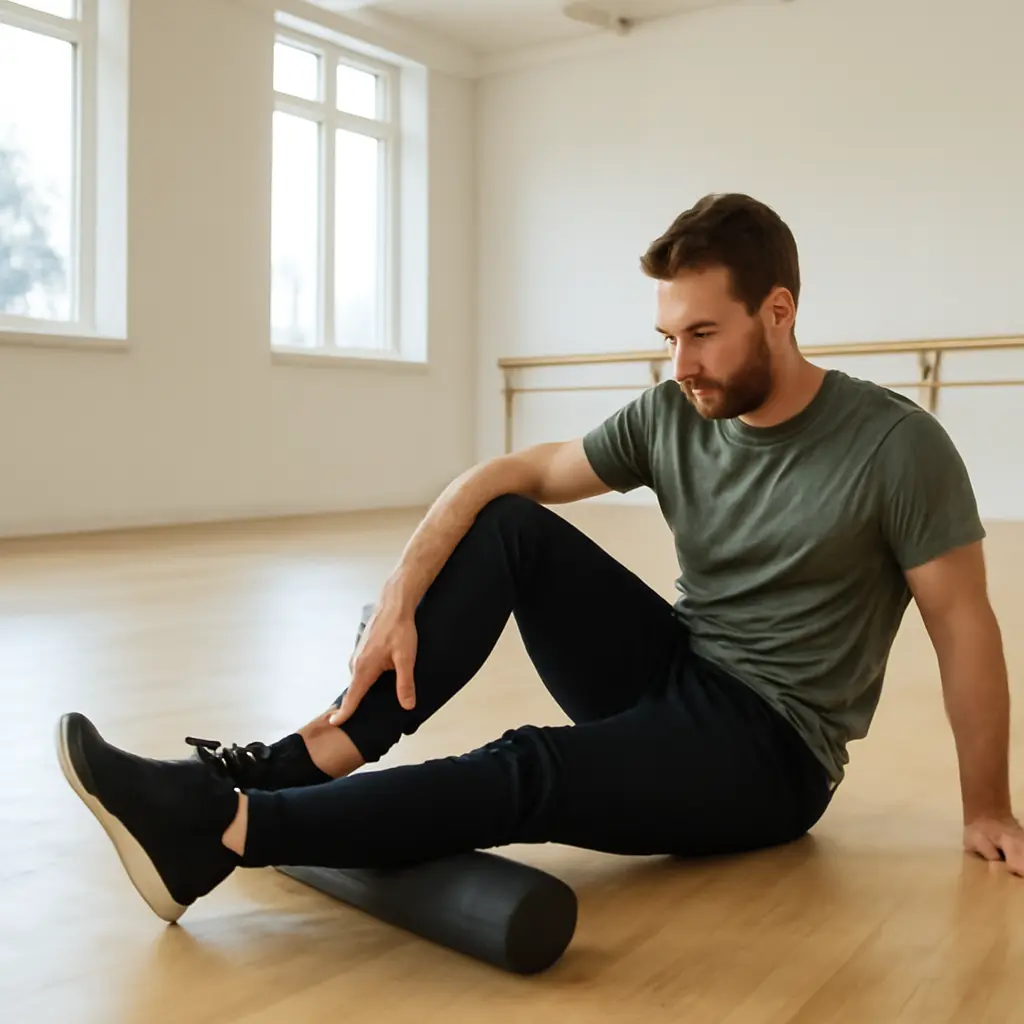
Self-massage includes using hands, massage balls, or foam rollers to apply pressure to accessible areas. A 2019 systematic review in Frontiers in Physiology reported that foam rolling may improve range of motion and reduce perceived muscle pain, with limited evidence of meaningful impairment to athletic performance when used around exercise. Foam rolling is not equivalent to a hands-on massage session, and research protocols vary. Use controlled pressure and avoid rolling directly over joints, bones, or an acutely injured area.
Timing, dose, and safe application
A suitable massage plan is guided by the goal: comfort, relaxation, or temporary mobility—not an assumed dose that guarantees tissue repair. Studies differ in treatment duration and timing, so findings do not establish a universal schedule. A practical approach is to begin gently, check how the body responds during and after treatment, and avoid any technique that produces sharp pain, numbness, bruising, or worsening symptoms.
Before and after exercise
Before activity, brief and comfortable soft-tissue work may be used as part of a warm-up, but it should not replace movement-specific preparation. After exercise, massage may help some people feel less sore; it should complement rather than displace hydration, adequate food, sleep, and a sensible training load. If performance is the priority, assess readiness through function and training response, not just how relaxed or tender the muscles feel.
When massage may be inappropriate
Massage is not suitable for every symptom or medical situation. Seek medical advice before massage when there is a suspected fracture, acute injury, unexplained swelling, infection, an open wound, or a known clotting or bleeding risk. The National Center for Complementary and Integrative Health notes that serious adverse effects are uncommon, but reports have included blood clots, nerve injury, and fractures, particularly in association with vigorous techniques or vulnerable health conditions.
Stop treatment if it causes sharp or escalating pain, tingling, numbness, or unusual bruising. A licensed or appropriately credentialed massage therapist can ask about relevant health conditions and adapt pressure; a clinician should evaluate symptoms that are severe, persistent, or worsening.
Putting the evidence into a recovery plan
A recreational runner with ordinary post-training soreness, for example, might try gentle self-massage for comfort and monitor whether normal walking and training movements improve. If soreness is accompanied by substantial swelling, weakness, or an inability to bear weight, massage is not an appropriate substitute for evaluation. This example illustrates the core evidence-based distinction: use massage to support comfort when appropriate, but use symptoms and function to guide decisions about health and training.
- Choose the method according to the goal and the body area, not a claim that one technique is universally superior.
- Keep pressure comfortable and stop if symptoms worsen or neurological sensations appear.
- Pair massage with rest, sleep, appropriate nutrition, gradual training, and clinical care when indicated.
- Track both perceived soreness and practical function, such as comfortable range of motion and ability to perform routine movements.
A simple recovery chart could compare perceived soreness and a repeatable movement measure—such as comfortable shoulder reach or bodyweight squat depth—before and after treatment. Such tracking is not a medical diagnosis, but it can help distinguish temporary relief from a meaningful change in function.
Conclusion
Targeted massage may offer modest, short-term relief from exercise-related soreness and may help some people perceive greater flexibility. Evidence does not show that it reliably restores strength or improves athletic performance, and proposed mechanisms should not be confused with proven tissue repair. Sports massage, focused pressure, and self-massage are different options with different practical considerations; safe pressure, sensible timing, and attention to contraindications are essential. Consider massage as one optional component of recovery, and seek professional assessment for significant or persistent symptoms.
Sources: National Center for Complementary and Integrative Health, Massage Therapy: What You Need To Know, https://www.nccih.nih.gov/health/massage-therapy-what-you-need-to-know; Guo, J. et al., Massage Alleviates Delayed Onset Muscle Soreness after Strenuous Exercise: A Systematic Review and Meta-Analysis, Frontiers in Physiology, 2018, https://doi.org/10.3389/fphys.2018.01045; Wiewelhove, T. et al., A Meta-Analysis of the Effects of Foam Rolling on Performance and Recovery, Frontiers in Physiology, 2019, https://doi.org/10.3389/fphys.2019.00376.